
Common specifications and wall thicknesses of seamless steel pipes
Seamless steel pipes come in a wide variety of specifications, typically indicated by outer diameter, wall thickness, and length. The manufacturing processes include cold rolling and hot rolling, with cold-rolled pipes having a maximum nominal diameter of 200 mm, while hot-rolled pipes can reach up to 600 mm. Wall thickness ranges from very thin to relatively thick, and different standards and applications correspond to various specifications, requiring comprehensive consideration of multiple factors when selecting.
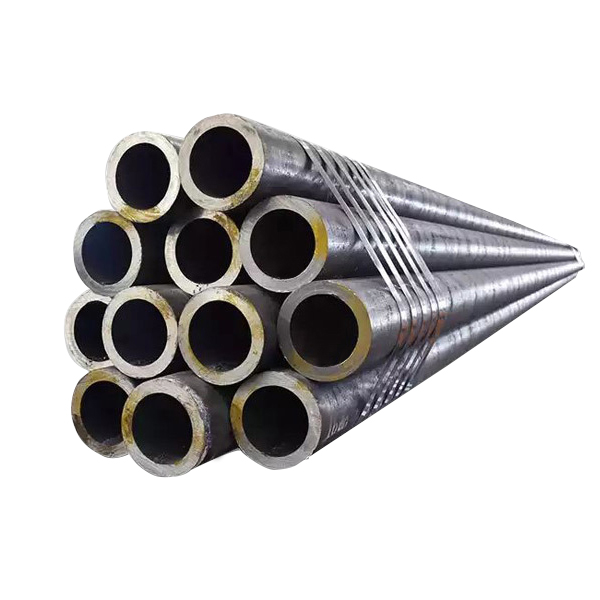
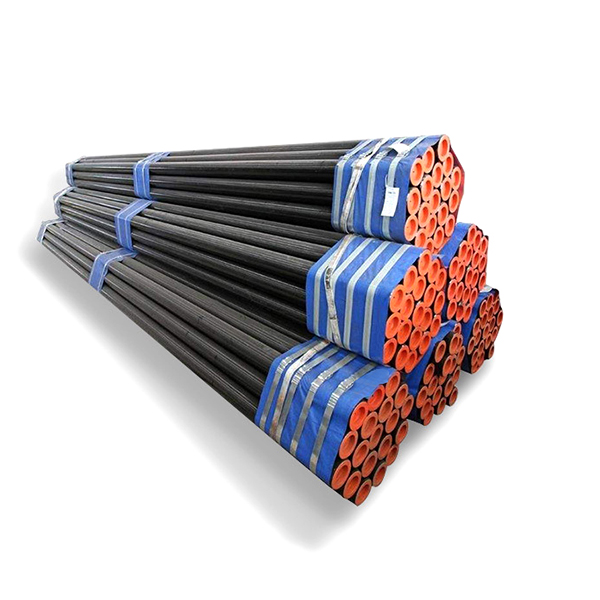
Steel seamless pipes are long strips of steel with a hollow cross-section and no seams on the periphery. They are widely used in the industrial sector, and their specifications and wall thicknesses are classified in various ways depending on different usage scenarios and standards. Here is a detailed introduction for you:
1. Common Specification Classification and Representation Method
The specifications of seamless steel pipes are usually expressed as "outer diameter × wall thickness", with the unit being millimeters (mm). Here are some common outer diameter specifications and corresponding wall thickness ranges:
1. Small-diameter seamless steel pipe
Outer diameter range: 6mm - 108mm
Common outer diameter specifications: 6, 8, 10, 12, 14, 16, 18, 20, 25, 32, 38, 42, 45, 48, 51, 57, 60, 76, 89, 108mm
Wall thickness range: 1mm - 12mm
Application scenarios: Mostly used for fluid transportation (such as water, gas), mechanical structural parts (such as automotive transmission shafts), instrument and metering conduits, etc.
2. Medium-sized seamless steel pipes
Outer diameter range: 114mm - 325mm
Common outer diameter specifications: 114, 133, 140, 159, 168, 180, 219, 273, 325mm
Wall thickness range: 4mm - 25mm
Application scenarios: Primarily used in petroleum pipelines, natural gas transportation, heating pipelines, and large mechanical structure supports, etc.
3. Large-diameter seamless steel pipes
Outer diameter range: Above 351mm
Common outer diameter specifications: 351, 402, 426, 450, 508, 610mm, etc.
Wall thickness range: 6mm - 50mm (some special applications can reach even thicker)
Application scenarios: Suitable for high-pressure pipelines (such as power plant steam pipelines), pressure vessels, marine engineering, bridge construction, etc.
II. Wall Thickness Classification and Application Scenarios
The wall thickness of seamless steel pipes can be classified according to the pressure-bearing capacity and usage requirements as follows:
1. Thin-walled steel pipes
Wall thickness range: 1mm - 4mm
Characteristics: Light weight, low cost, but with relatively weak pressure-bearing capacity
Application: Decorative pipes, furniture structures, lightweight mechanical parts
2. Medium-walled steel pipes
Wall thickness range: 4mm - 10mm
Characteristics: Good comprehensive performance, balancing strength and weight
Application: Fluid transportation (water, oil, gas), general mechanical structures
3. Thick-walled steel pipes
Wall thickness range: Above 10mm
Characteristics: Strong pressure-bearing capacity, capable of withstanding high pressure, high temperature or corrosive media
Application: High-pressure pipelines (such as boiler tubes), pressure vessels, geological drilling, military equipment
III. Examples of Specifications for Special-Purpose Seamless Steel Pipes
1. Seamless steel pipes for high-pressure boilers (GB 5310)
Example: φ51×6, φ108×10, φ159×16. The wall thickness is relatively thick and is used in high-temperature and high-pressure environments (such as power station boilers).
2. Seamless steel pipes for hydraulic supports (MT/T 1006)
Example: φ110×12.5, φ140×16. The wall thickness is uniform and the strength is high, used in coal mine hydraulic supports.
3. Seamless steel pipes for petroleum cracking (GB 9948)
Example: φ102×10, φ152×14. Resistant to high temperatures and corrosion, used in pipelines in the petroleum refining process.
IV. Selection Suggestions
Determine the standard based on the purpose: For fluid transportation, choose GB/T 8163; for structural purposes, select GB/T 8162; for high-pressure scenarios, choose specific standards (such as GB 5310).
Calculate the wall thickness based on pressure-bearing capacity: The greater the wall thickness, the stronger the pressure-bearing capacity. The required minimum wall thickness can be calculated using formulas (such as the Barlow formula).
Consider material properties: Different materials (such as 20# steel, 45# steel, stainless steel 304/316) have different strengths and corrosion resistance, which will affect the specification selection.
If more specific specifications or requirements are needed, it is recommended to refer to relevant standard manuals to ensure compliance with actual usage requirements.
Copyright and Disclaimer: The above content is from the Internet. If there is any infringement, please contact us to remove it.
Content Statement: Some of the content is generated by AI assistance and is for reference only.