
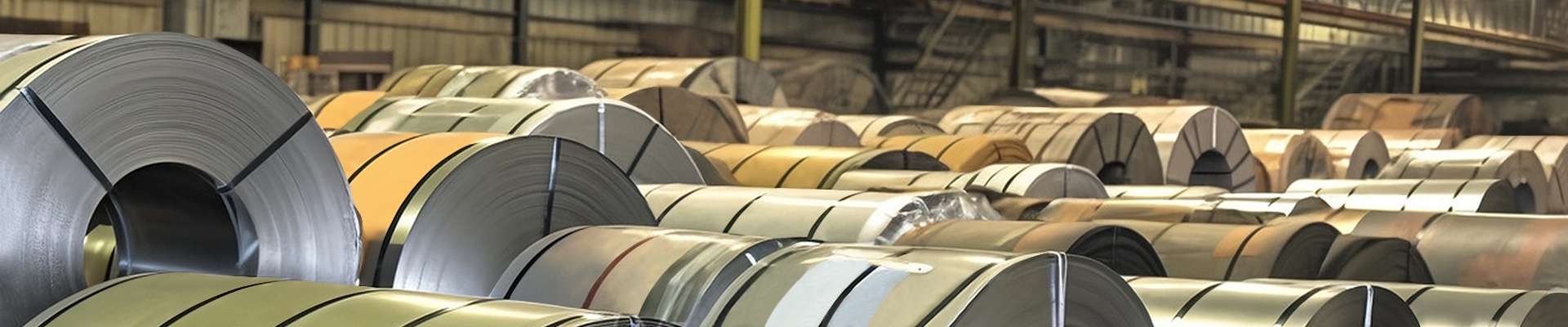
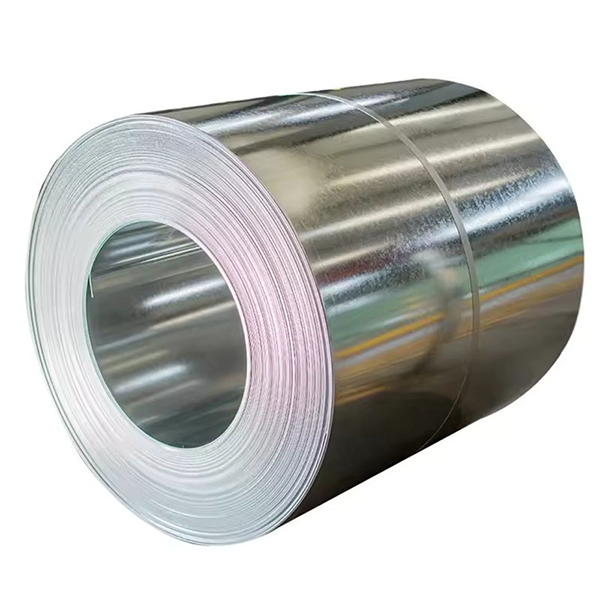
Comparison of acid-washed rolls' products
By definition, steel ingots or billets are difficult to deform and process at room temperature. They are usually heated to 1100 - 1250℃ for rolling, and this rolling process is called hot rolling. Most steel products are produced by hot rolling. However, as the surface of steel is prone to form iron oxide scale at high temperatures, making the surface of hot-rolled steel rough and the dimensions fluctuate greatly, for steel products that require a smooth surface, precise dimensions and good mechanical properties, hot-rolled semi-finished or finished products are used as raw materials and then processed by cold rolling.
Rolling at room temperature is generally understood as cold rolling. From a metallurgical perspective, the boundary between cold rolling and hot rolling should be defined by the recrystallization temperature. That is, rolling below the recrystallization temperature is cold rolling, while rolling above it is hot rolling. The recrystallization temperature of steel is 450 to 600 degrees Celsius.
Hot rolling, as the name suggests, refers to the fact that the temperature of the rolled piece is high, thus the deformation resistance is low, and a large deformation amount can be achieved. Taking the rolling of steel plates as an example, the thickness of the continuous casting billet is generally around 230mm, but after rough rolling and fine rolling, the final thickness is 1 to 20mm. At the same time, due to the small aspect ratio of steel plates, the size accuracy requirements are relatively low, and plate shape problems are not easy to occur, with controlling bulge as the main focus. For those with specific requirements on the structure, it is generally achieved through controlled rolling and controlled cooling, that is, controlling the initial rolling temperature, final rolling temperature and coiling temperature during fine rolling to control the microstructure and mechanical properties of the steel strip.
Cold rolling generally does not involve a heating process before the initial rolling. However, due to the thin thickness of the steel strip, it is prone to form shape problems. Moreover, as the product after cold rolling is already finished, many cumbersome processes are adopted to control the size accuracy and surface quality of the steel strip. The cold rolling production line is long, with numerous equipment and complex processes. With the increasing requirements from users for the size accuracy, shape and surface quality of the steel strip, the control models, L1 and L2 systems, and shape control methods of the cold rolling unit are relatively more compared to the hot rolling. Moreover, the temperature of the rolls and the steel strip is also an important control indicator.
Hot-rolled plates have low hardness and are easy to process, with good ductility. Cold-rolled plates have higher hardness and are more difficult to process, but they are less prone to deformation and have higher strength.
Hot-rolled plates have relatively lower strength and poor surface quality (with oxidation and low smoothness), but they have good plasticity. They are usually medium-thick plates. Cold-rolled plates: have high strength and hardness, high surface smoothness, and are usually thin plates. They can be used as stamping plates.
Hot-rolled steel plates have mechanical properties far inferior to those of cold-processed and forged products. However, they possess good toughness and ductility.
Cold-rolled steel plates, due to the degree of work hardening during processing, have low toughness. Nevertheless, they can achieve a relatively good yield-to-strength ratio, which makes them suitable for manufacturing parts such as cold-formed spring sheets. Additionally, since their yield point is closer to the tensile strength, they lack predictability in terms of potential dangers during use. Thus, accidents are prone to occur when the load exceeds the allowable load.
Cold-rolled products and hot-rolled products represent the difference between the previous and subsequent processes. Hot-rolled products are the raw materials for cold-rolled products. During the cold-rolling process, the hot-rolled steel coils that have undergone acid washing are fed onto the machine and rolled using roller-type rolling machines. The entire process is a cold processing form. The main purpose is to transform thick-sized hot-rolled plates into thin-sized cold-rolled plates. For instance, a 3.0mm hot-rolled plate fed onto the machine can be rolled into a 0.3-0.7mm cold-rolled coil. The main principle is to forcibly deform using the extrusion principle.
Copyright and Disclaimer: The above content is from the Internet. If there is any infringement, please contact us to remove it.
Content Statement: Some of the content is generated by AI assistance and is for reference only.