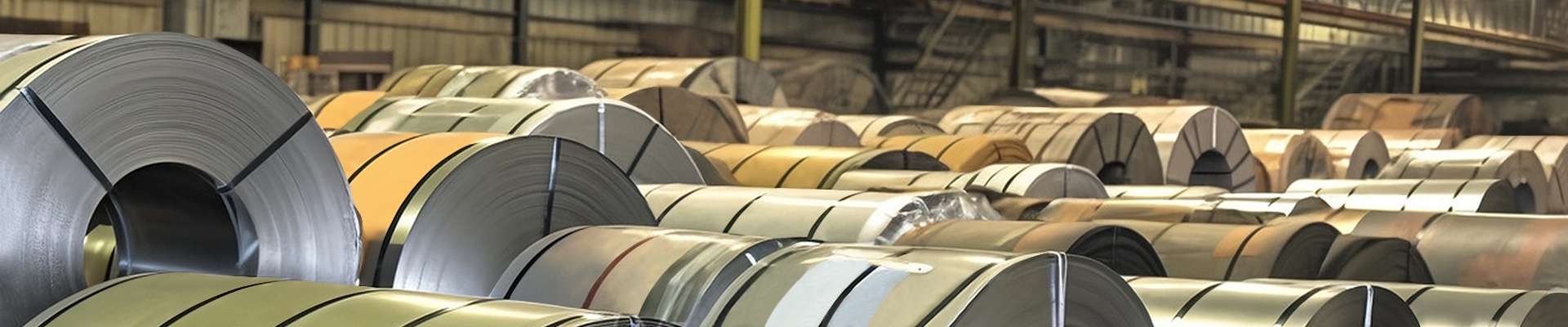
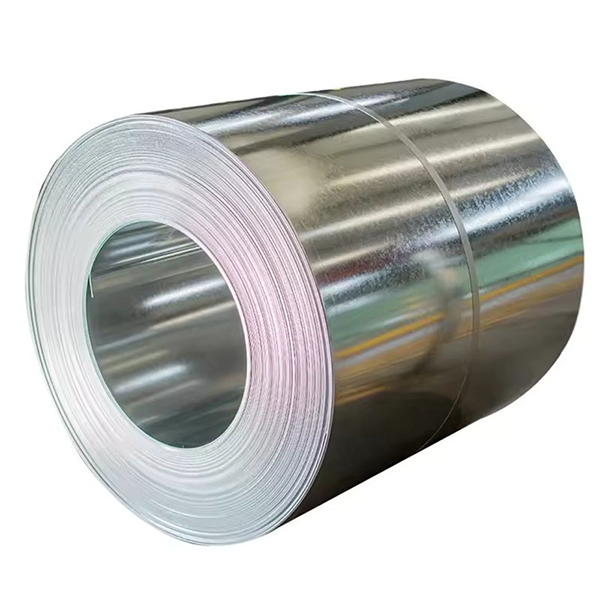
The core production process of steel strips
· Cold Rolling - The Key to Achieving Dimension and Strength
• Objective: To roll the hot-rolled and pickled raw material coils to the target thickness at room temperature, and at the same time increase the strength and hardness of the steel strip through "work hardening".
• Process: The steel strip passes through a high-precision rolling mill composed of multiple rolls and is thinned under tremendous pressure.
• Key Controls: Rolling force, speed, lubrication and cooling. Good lubrication can reduce friction and roll wear, and achieve better surface finish.
• Result: The output is called "cold-rolled hard coil". At this point, although the steel strip has reached the thickness requirement, it has become hard and brittle due to work hardening and cannot be directly processed by deep drawing, etc. The next step - annealing - must be carried out.
· Annealing - The "Magic" to Restore Toughness
• Purpose: To eliminate the internal stress and work hardening caused by cold rolling, restore the toughness and ductility of the steel strip, and optimize its microstructure.
• Process: Heat the steel strip in a protective atmosphere (such as a mixture of nitrogen and hydrogen) to a temperature above the recrystallization point and hold it for a period of time, then cool it slowly.
• Types:
• Batch annealing: Stack the steel coils on a base, cover them with an inner hood, and conduct long-term annealing. It is less efficient but ensures uniform performance.
• Continuous annealing: The steel strip continuously runs through a furnace filled with protective gas, completing the heating, holding, and cooling processes. It is highly efficient, with precise performance control, and is the mainstream process in modern times.
• Result: Produces "cold-rolled soft coils" or "fully soft material", making the steel strip soft and tough.
To be finished - "Finishing" for ultimate performance
Steel strips after annealing may have yield platforms (which can cause Lüders bands during stamping and affect surface aesthetics) or plate shape issues, thus requiring finishing treatment. This mainly includes:
- Leveling:
- Purpose: Eliminate yield platforms, improve plate shape, and achieve the desired surface finish (such as bright, matte, or rough).
- Process: Pass the steel strip through a rolling mill with a very small rolling force for a slight reduction (0.5% to 3% elongation).
- Straightening and tension leveling:
- Purpose: Improve the straightness (plate shape) of the steel strip, eliminate defects such as scythe bends and waves.
- Process: Straighten the steel strip through a combination of bending and tension.
When choosing a steel strip supplier, the following factors should be considered:
- Product range: Whether the supplier can provide the required grades and specifications of products
- Quality certification: Whether it has passed industry certifications such as ISO9001 and IATF 16949
- Inventory capacity: Whether it has sufficient inventory to ensure short-term delivery
- Technical support: Whether it can provide professional technical support and solutions
Copyright and Disclaimer: The above content comes from the internet. If there is any infringement, please contact us to delete it.
Content Statement: Some content is assisted by AI writing and is for reference only.