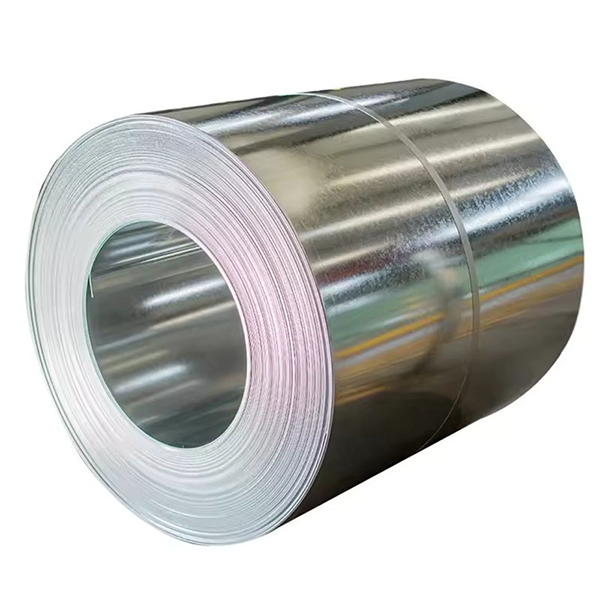
The differences of pickled coils
Cold rolling and hot rolling are two different steel rolling techniques. As the names suggest, cold rolling is the process of rolling steel at room temperature, and this type of steel has high hardness. Hot rolling is the process of rolling steel at high temperatures.
1. The surface of cold-rolled plates has a certain luster and feels smooth when touched, similar to the common steel water cups used for drinking.
2. If the hot-rolled plates have not undergone acid washing treatment, their surfaces are similar to those of many ordinary steel plates on the market. The rusty surface is red, and the non-rusty surface is dark purple (oxide scale).
Hot rolling
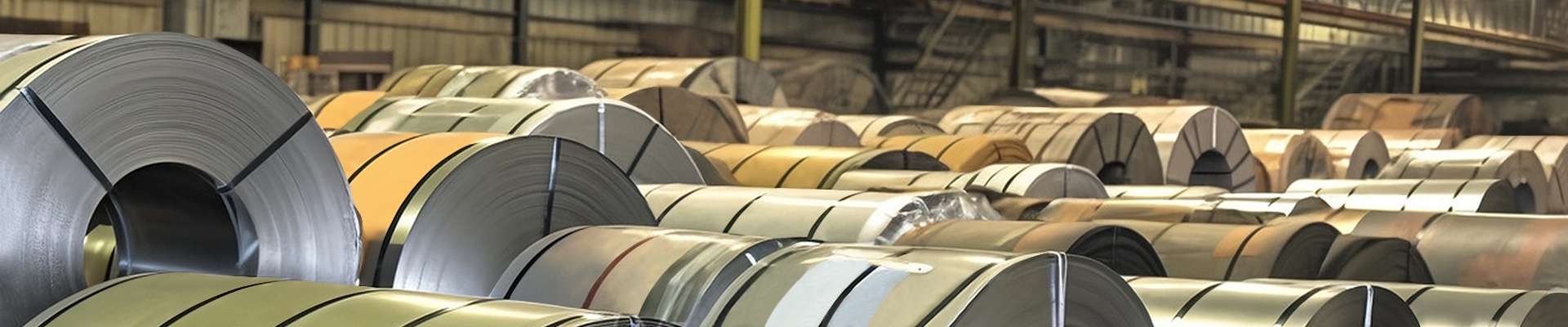
Using continuous casting slabs or initial rolling slabs as raw materials, they are heated in a step-type heating furnace, descaled by high-pressure water, and then enter the roughing mill. The roughing material is cut at the head and tail, and then enters the finishing mill for computer-controlled rolling. After the final rolling, it undergoes laminar cooling (computer-controlled cooling rate) and is coiled by a coiler to become a direct delivery coil. The head and tail of the direct delivery coil are often tongue-shaped and fish-tail-shaped, with poor thickness and width accuracy, and often have defects such as waves, folded edges, and tower shapes on the edges. Its coil weight is relatively heavy, and the inner diameter of the steel coil is 760mm. (Generally, the pipe-making industry prefers to use it.) After the direct delivery coil is cut at the head and tail, trimmed, and processed through multiple passes of straightening and leveling in the finishing line, it is then cut into plates or re-coiled to become: hot-rolled steel plates, leveled hot-rolled steel coils, and longitudinal cut strips, etc. If the hot-rolled finishing coil is pickled to remove the oxide scale and oiled, it becomes hot-rolled pickled coil. This product has a tendency to partially replace cold-rolled plates, with a moderate price and is deeply loved by users.
Cold Rolling
Cold rolling is carried out using hot-rolled steel coils as raw materials. After pickling to remove the oxide scale, the steel is cold-rolled continuously. The finished product is a hard-rolled coil. Due to the cold work hardening caused by continuous cold deformation, the strength and hardness of the hard-rolled coil increase, while the toughness and plasticity decrease. As a result, the stamping performance deteriorates, and it can only be used for parts with simple deformation. Hard-rolled coils can be used as raw materials for hot-dip galvanizing plants because hot-dip galvanizing lines are equipped with annealing lines. The weight of hard-rolled coils is generally between 6 and 13.5 tons, and the inner diameter of the steel coil is 610mm.
Generally, cold-rolled sheets and coils should undergo continuous annealing (CAPL line) or bell annealing to eliminate cold work hardening and rolling stress, and to meet the mechanical property requirements specified in the corresponding standards.
The surface quality, appearance, and dimensional accuracy of cold-rolled steel plates are superior to those of hot-rolled steel plates. Moreover, the product thickness can be rolled down to approximately 0.18mm, making it highly favored by users. Deep processing of cold-rolled steel coils into high-value-added products, such as electro-galvanized, hot-dip galvanized, fingerprint-resistant electro-galvanized, color-coated steel coil, vibration damping composite steel plate, and PVC-coated steel plate, is also common.
Advantages of cold-rolled steel plates compared to hot-rolled steel plates:
1. Higher precision, with the thickness difference of cold-rolled steel strips not exceeding 0.01 to 0.03 mm.
2. Thinner dimensions, the thinnest cold-rolled steel strip can reach 0.001 mm; while the thinnest hot-rolled steel strip currently available is 0.78 mm.
3. Superior surface quality, cold-rolled steel plates can even produce mirror-like surfaces; while the surface of hot-rolled plates has impurities such as iron oxide scale and pockmarks.
4. Cold-rolled steel plates can be adjusted according to user requirements for their mechanical properties such as tensile strength and process properties such as stamping performance.
Copyright and Disclaimer: The above content is from the internet. If there is any infringement, please contact us to remove it.
Content Statement: Some of the content is generated by AI assistance and is for reference only.